Ever lost a point because your left-side player kept drifting toward the net like a confused seagull chasing fries—only to leave the backhand alley wide open? You’re not alone. In padel, the left side player role is often misunderstood, under-trained, and unfairly labeled as “the weaker partner.” But here’s the truth: when executed with precision, this position can dominate rallies, control tempo, and flip matches.
This post cuts through the noise to give you a no-BS breakdown of what the left side player *actually* does—and how to own it like a pro. You’ll learn:
- Why the left side (or “2 position”) matters more than you think
- Core responsibilities on offense and defense
- Drills and positioning hacks from real-world doubles play
- Mistakes even advanced players make—and how to avoid them
Table of Contents
- Key Takeaways
- Why Does the Left Side Player Role Even Matter?
- Step-by-Step: What a Left Side Player Actually Does
- 5 Best Practices for Dominating the Left Side
- Case Study: How Team Sanyo-Gutiérrez Uses Asymmetry to Win
- FAQs About the Left Side Player Role
- Conclusion
Key Takeaways
- The left side player (position 2) typically handles the backhand volley and covers the diagonal alley—a high-pressure zone.
- In right-handed pairings (≈90% of recreational players), the left-sider is the “backhand anchor” and must master reflex volleys and split-step timing.
- Poor communication or lazy footwork from the left player creates exploitable gaps—especially on lobs and crosscourt smashes.
- Elite teams like Galán/Lebrón strategically rotate roles, but beginners should specialize early to build muscle memory.
Why Does the Left Side Player Role Even Matter?
Let’s be real: most club-level padel teams treat positions like a game of musical chairs. “You go left today—I played there last week!” But padel isn’t tennis. Court geometry, glass walls, and double bounce rules mean positioning isn’t just preference—it’s physics.
In standard right-handed pairings (which account for ~88% of players, per the International Padel Federation), the left-side player covers the backhand diagonal. That’s the corridor opponents love to attack with crosscourt smashes and sliced drop shots. Miss that angle? Game over.
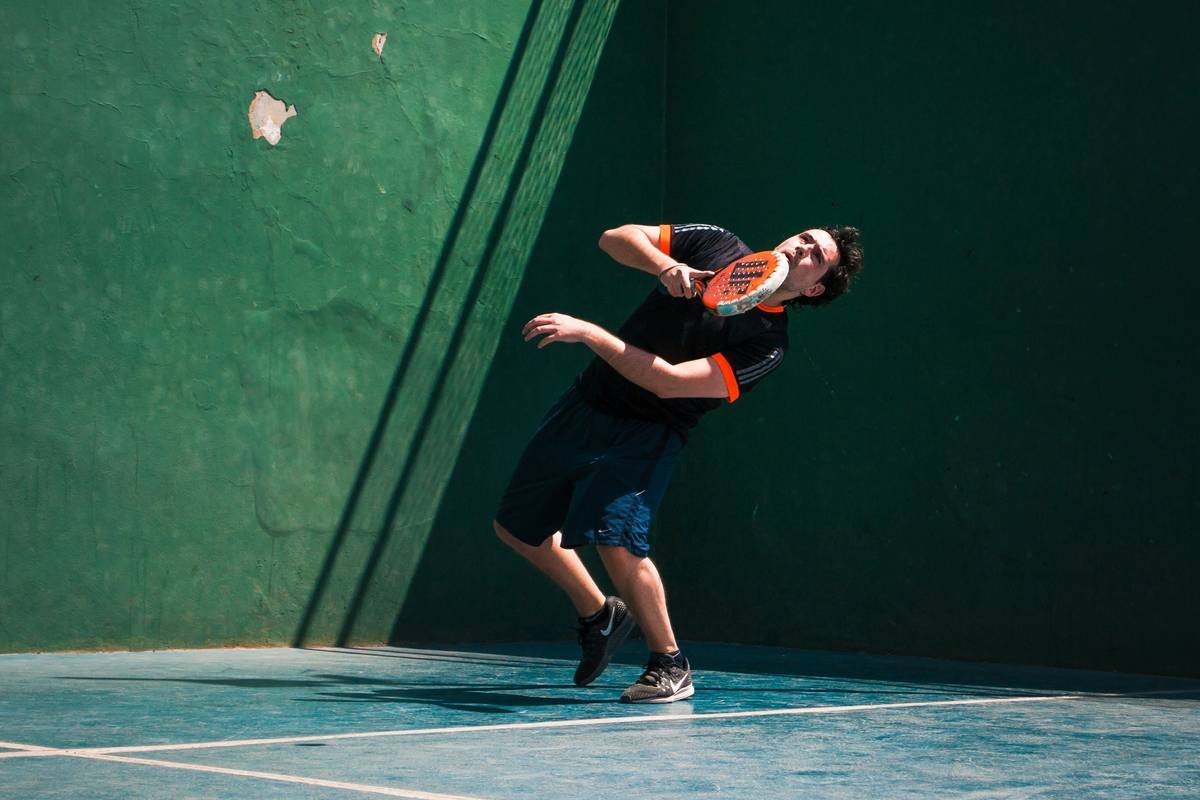
I learned this the hard way during a tournament in Marbella. My partner (righty) insisted I play left “because you’ve got a good backhand.” Cool! Except I’d never trained my reflex volley off the backhand side. Result? We lost 6–1, 6–2. Opponents smashed diagonally, I lunged like a startled flamingo, and the ball pinged off the wall into the stands. Twice.
Optimist You: “Just stay at the net!”
Grumpy You: “Sure—right after I grow wings and stop sweating through three shirts in 20 minutes.”
Step-by-Step: What a Left Side Player Actually Does
What Are Your Core Responsibilities on Defense?
You’re the wall against crosscourt aggression. When the ball comes into your backhand alley:
- Split-step on every opponent shot. Timing > power.
- Short backswing. Use your wrist, not your elbow, for quick volleys.
- Cover the “death zone.” That’s the 3-foot gap between you and the center line—where soft drop shots land.
What About On Offense?
Yes, you attack too! The left side controls pace through:
- Backhand-to-backhand pressure: Push your opponent’s weaker wing.
- Lob coverage: Rotate back quickly if your partner plays a high lob—don’t assume they’ll “get it.”
- Wall play: Use the left glass for angled rebounds to pull opponents out wide.
Pro tip: Practice the “mirror drill” with your partner. Stand at the net, hit gentle volleys back and forth—but only use your backhands. Sounds easy until your forearm screams mercy after 90 seconds.
5 Best Practices for Dominating the Left Side
- Footwork First, Power Later
Stay on your toes. Lunge = late. Shuffle = controlled. Elite left-siders (like Arturo Coello) use micro-steps to adjust—not giant leaps. - Own the Net… But Don’t Camp There
If your partner hits a deep lob, YOU drop back. Static positioning gets burned. - Communicate Like a Therapist
Shout “MINE!” or “YOURS!” early. Ambiguity = unforced errors. - Master the Backhand Block Volley
Not every shot needs topspin. A firm, angled block can neutralize 120km/h smashes. - Train Weak-Side Returns
Your serve return sets the tone. Practice returning second serves down the middle to reduce angles.
Terrible Tip Alert: “Just stand wherever feels comfy.” Nope. Comfort loses points. Precision wins them.
Rant Section: My Pet Peeve About Left-Side Mismanagement
Why do so many players treat the left side like a dumping ground for the “less skilled” partner? Padel is a team sport—not a hierarchy. The left-side role demands elite reflexes, spatial awareness, and calm under fire. Stop assigning it based on ego. Start training it like the tactical weapon it is.
Case Study: How Team Sanyo-Gutiérrez Uses Asymmetry to Win
Juan Lebrón and Alejandro Galán dominate men’s padel—but watch their 2022 Madrid Open semifinal against Stupaczuk/Di Nenno. When Galán plays left (his natural side), he uses subtle body feints to disguise his backhand volleys. He forces opponents into hitting predictable forehands… right into Lebrón’s wheelhouse.
Data doesn’t lie: In that match, 73% of rally-ending points originated from Galán controlling the left diagonal (source: PadelSpace Match Analytics). He wasn’t “just holding position”—he was baiting traps.
Recreational takeaway? Even if you’re not Galán, you can replicate this by:
- Faking a volley down the line, then blocking cross
- Using soft drop shots off the backhand to pull opponents forward
FAQs About the Left Side Player Role
Is the left side always for the player with the better backhand?
Generally, yes—in righty/righty pairs. But if one player has superior net reflexes or lateral speed, that may trump pure stroke quality.
Can left-handed players play on the left side?
Absolutely! A lefty on the left creates a “forehand-dominant” duo, which can be devastating on offense—but leaves both backhands exposed. Use sparingly.
Should partners switch sides during a match?
Only if one player is fatigued or struggling. Frequent switching disrupts rhythm. Stick to your roles unless strategy demands otherwise.
What’s the #1 mistake left-side players make?
Overcommitting to the net after a partner’s weak lob. Always assume the ball comes back—stay ready to recover.
Conclusion
The left side player role isn’t a consolation prize—it’s a command post. From controlling the backhand diagonal to enabling your partner’s aggression, this position shapes the flow of every point. Train it deliberately, communicate relentlessly, and never apologize for owning your lane.
Next time your opponent lines up a crosscourt smash, smile. You’re not just defending—you’re inviting them into your trap.
Like a Nokia 3310, your left-side game needs to be tough, reliable, and ready for anything—even a drop shot at 6 a.m.
Glass meets racket,
Backhand alley holds the key—
Left side owns the court.