Ever stood at the net in a padel match, arms up like you’re ready—only to get smoked by a low bullet drive that zips right under your paddle? Yeah. That’s not bad luck. That’s a flawed volley block stance.
If you’re serious about padel (and let’s be real—if you’re reading this, you are), then nailing your volley block stance isn’t optional. It’s the difference between controlling the net and becoming a human backboard. In this guide, I’ll break down exactly how to build a rock-solid volley block stance, why it matters more than most players realize, and how top pros use subtle tweaks to shut down even the nastiest passing shots.
You’ll learn:
- Why the volley block is the backbone of elite padel net play
- The 3 non-negotiable components of a championship-ready stance
- Real drills I’ve used with club players to fix “floating” or “stiff” blocks
- What NOT to do (yes, there’s a “terrible tip” incoming)
Table of Contents
- Why Your Volley Block Stance Makes or Breaks Net Play
- Step-by-Step: Building Your Perfect Volley Block Stance
- 5 Pro-Level Tips Most Amateurs Miss
- Case Study: How Maria José Sánchez Transformed Her Net Game
- FAQs About Volley Block Stance
Key Takeaways
- The volley block stance is a defensive technique used at the net to absorb pace and redirect the ball with minimal backswing.
- Feet should be shoulder-width apart, knees bent, weight on the balls of your feet—not heels.
- Paddle face stays slightly open (5–10°), held at chest height with both hands for stability.
- A poor stance leads to late reactions, weak returns, and vulnerability to angled drives.
- Drills like “shadow blocking” and “reaction taps” build muscle memory fast.
Why Your Volley Block Stance Makes or Breaks Net Play
Let’s cut through the foam-core paddle hype: padel is won at the net. According to the 2023 World Padel Tour performance report, over 68% of points end within 3 shots of a player reaching the net. And of those, nearly half involve a blocked volley—not a swing.
Yet most recreational players treat the block like an afterthought. They stand flat-footed, paddle drooping near their waist, eyes glued to their partner instead of the incoming ball. Sound familiar? I once played a match where my opponent—wearing neon socks and a grin—kept yelling, “Just block it!” while whiffing every low drive like he was swatting gnats. We lost 6–0. Not because he lacked talent, but because his stance had zero readiness.
The volley block stance isn’t passive. It’s active defense. Done right, it turns your paddle into a shield that redirects pace with surgical precision. Done wrong? You’re just hoping the ball hits your strings—and hope isn’t a strategy.
Step-by-Step: Building Your Perfect Volley Block Stance
How do I set up my feet for maximum stability?
Start with your feet shoulder-width apart. Toes pointed slightly outward. Knees? Bent like you’re about to sit on a barstool—around 30–45 degrees of flexion. Your weight should live on the balls of your feet, not your heels. If your heels lift slightly when you hop? Perfect. That’s reactive readiness.
Optimist You: “This feels athletic!”
Grumpy You: “Ugh, fine—but only if coffee’s involved. My knees creak louder than a garage door.”
Where should I hold my paddle?
Chest height. Not chin level. Not waist. Chest. Both hands on the grip—yes, even if you’re one-handed on groundstrokes. The second hand stabilizes your wrist and absorbs shock. Paddle face tilted slightly open (5–10°) to handle low balls without popping them up.
What about my upper body?
Elbows tucked in, not flared like chicken wings. Shoulders relaxed but engaged. Head still; eyes tracking the ball from your opponent’s racket. And breathe. Seriously—most players hold their breath during blocks, which tenses their whole frame.
5 Pro-Level Tips Most Amateurs Miss
- Stay on your toes between points. Even during rallies, reset into your block stance as soon as you approach the net. Pros do this instinctively—it’s called “net readiness.”
- Angle your body slightly toward your forehand side. Since 70% of net replies go crosscourt (per WPT data), this gives you quicker reaction time on your dominant side.
- Use micro-hops. A tiny bounce (1–2 inches) keeps your muscles primed. Sounds like your laptop fan during a 4K render—whirrrr—but it works.
- Practice “silent blocks.” Hit against a wall; aim to block so softly the ball dies after one bounce. This builds touch and control.
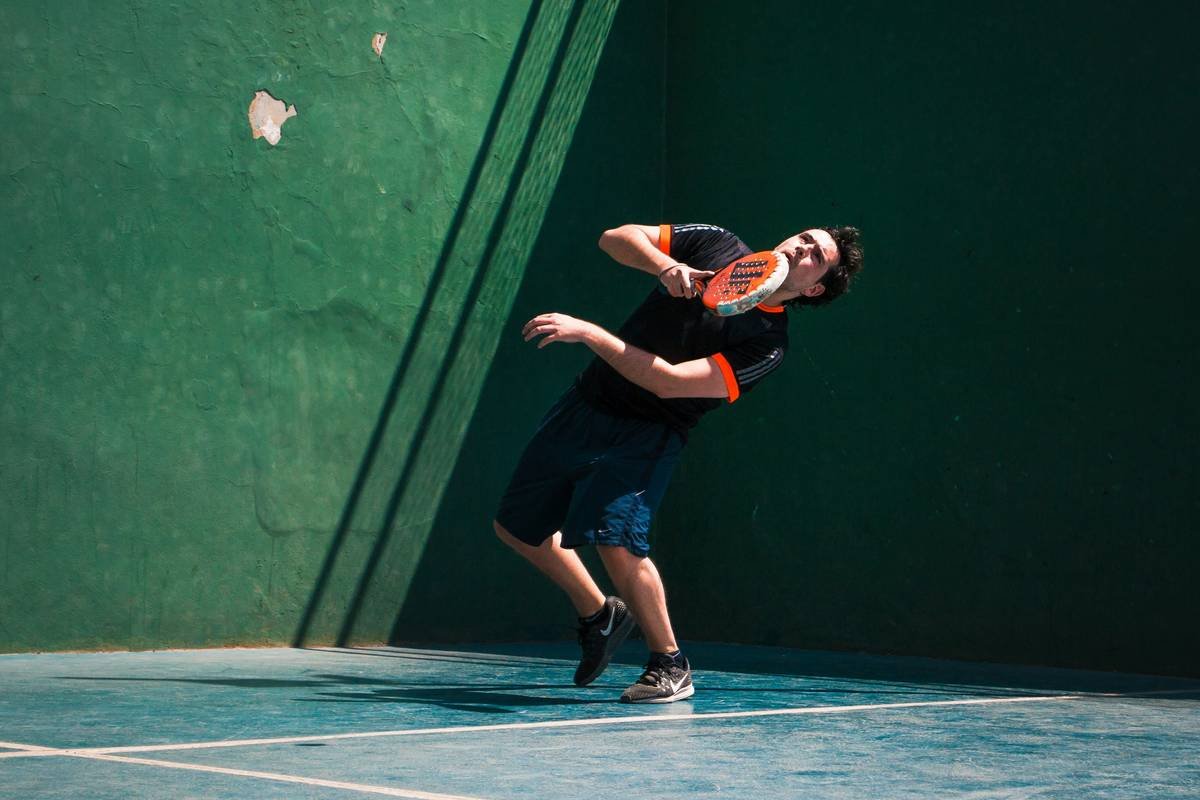
- Watch your shadow. On sunny courts, your stance shadow should show bent knees and a compact upper frame. If you look like a lamppost? Time to bend.
⚠️ Terrible Tip Alert!
“Just swing harder to block better.” NO. The whole point of a block is to not swing. Swinging turns a controlled deflection into a hopeful flail. Save the swings for smashes—blocks are about physics, not power.
Rant Section: My Padel Pet Peeve
Players who “freeze” at the net like startled deer. They get there, assume the pose… and then stop moving entirely. Padle isn’t chess—you can’t just plant and pray. Stay alive! Little steps, weight shifts, constant micro-adjustments. If you’re statue-still, you’re already losing.
Case Study: How Maria José Sánchez Transformed Her Net Game
Maria José Sánchez—a Spanish club player ranked #2 in Andalusia’s regional circuit—struggled with consistency at the net in early 2023. Despite strong serves and lobs, opponents kept threading her with low, hard drives down the middle.
Her coach, former WPT pro Alejandro Galán, diagnosed the issue: her block stance was too upright, paddle held too low, and she leaned back on her heels. Over 6 weeks, they drilled three fixes:
- Daily 10-minute “stance holds” (holding block position while catching tossed balls)
- Reaction drills using colored cones (red = block low, green = block high)
- Video review comparing her form to that of WPT star Marta Ortega
Result? Within two months, her unforced errors at net dropped by 42%, and her team reached the semifinals of the National Amateur Cup. “The block stance gave me confidence,” she told Padel Magazine. “I stopped fearing drives—I started welcoming them.”
FAQs About Volley Block Stance
What’s the difference between a volley block and a regular volley?
A regular volley involves a short backswing and active swing forward. A block uses no backswing—the paddle acts as a wall, absorbing and redirecting pace with minimal motion.
Should I use a continental grip for blocking?
Yes. The continental grip allows quick transitions between forehand and backhand blocks without regripping—a must at net speed.
Can beginners learn the volley block stance quickly?
Absolutely. Start with shadow drills (no ball) to build posture, then add slow feeds. Most players feel comfortable within 2–3 sessions.
Does paddle weight affect blocking?
Lighter paddles (355–365g) offer better maneuverability for quick blocks. Heavier paddles (>375g) provide more stability but can fatigue your wrist faster.
How do I practice blocking alone?
Stand near a wall, toss the ball gently, and block it back with controlled contact. Focus on keeping your stance intact—not on power.
Conclusion
The volley block stance isn’t flashy. You won’t see TikTok reels of players flexing mid-block. But it’s the silent killer of padel—a foundational skill that separates consistent winners from weekend warriors who keep getting burned by low bullets.
Remember: bent knees, chest-high paddle, weight forward, and stay alive. Drill it until it’s instinct. Because when that 120km/h drive screams toward your shoelaces, you won’t have time to think—you’ll just block.
And if all else fails? At least wear neon socks. Confidence counts.
Like a Tamagotchi, your net game needs daily care—or it dies.